
Bio
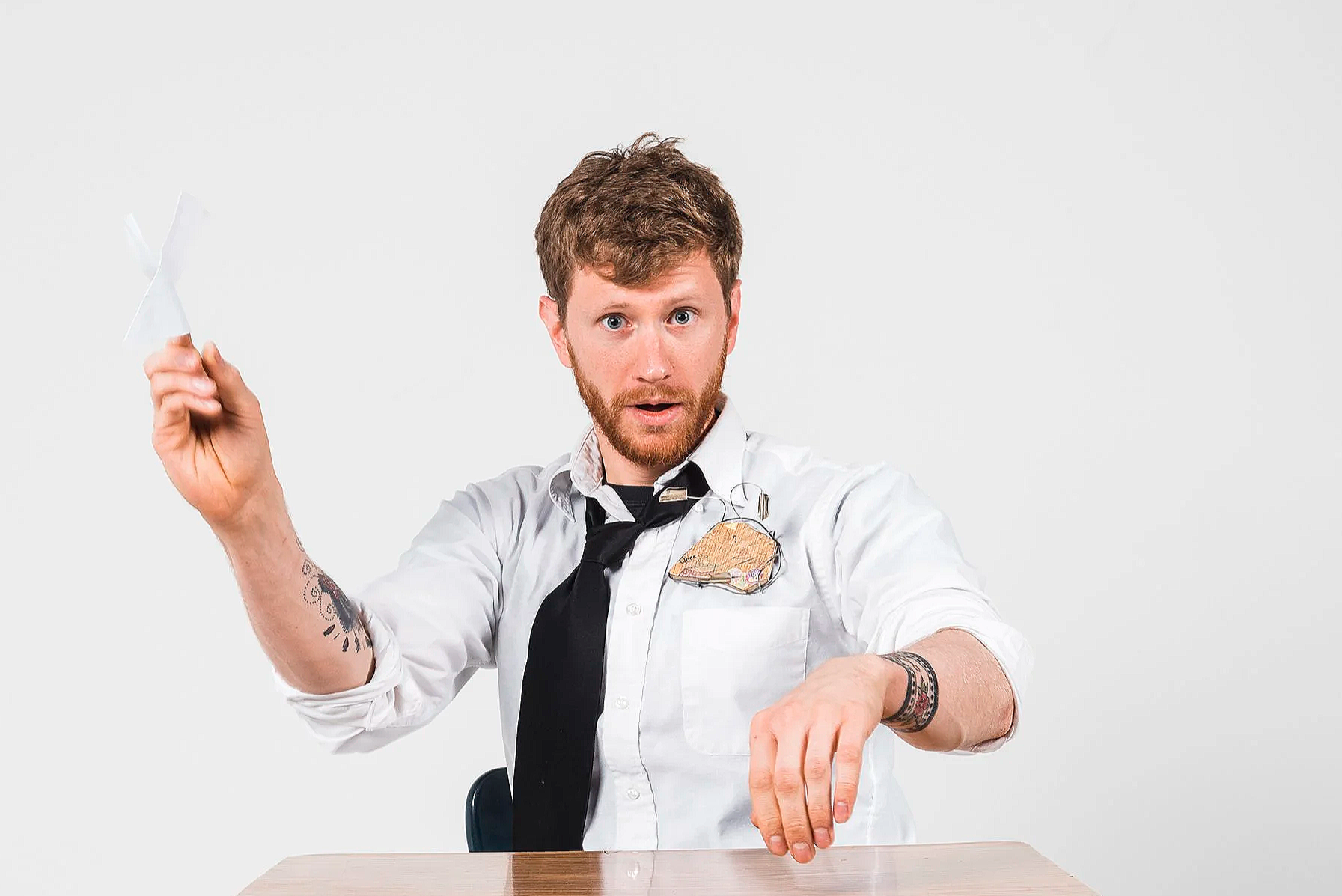
Jason Thomson aka JJ was born in Lake Bluff, Illinois, and currently lives in Minneapolis, Minnesota, where he creates contemporary jewelry in his studio. He earned a BFA from the University of Wisconsin–Whitewater in 2016 and an MFA from the University of North Texas 2019.
Thomson combines traditional metalsmithing techniques with digital fabrication to create wearable jewelry using found materials from K–12 school desks. His work has been featured in the Triple Parade Biennale for Contemporary Jewellery in Shanghai, China; the 32nd KJDA Exhibition; American Craft Fest; Invisible: VisAble at the Abernathy Arts Center in Atlanta, Georgia; and Materials: Hard + Soft, the International Contemporary Craft Competition and Exhibition in Denton, Texas.
His work has also been featured in Permanent 2017 in Lille, France, and published in Metalsmith magazine in conjunction with the Repair and Renewal exhibition. Thomson Also presented at the Digital Meets Handmade Symposium in New York at FIT, and his work was included in the 4th Annual Triple Parade in Shanghai, China.

Artist Statement
My work explores disability, identity, and visibility through wearable and sculptural objects created using metalsmithing techniques such as stone setting, hammer texturing, and engraving. Drawing on my lived experience as a person with ADHD, Auditory Processing Disorder, Reading Disorder, and Writing Expression Disorder, I use repetitive textures and overlapping text to communicate aspects of my experience that can be difficult to articulate or understand.
The surfaces of my work accumulate marks and words until the text becomes illegible, reflecting the challenges of processing and communicating information. Concealed stones represent the value of disability as part of the wearer's identity, even when that part of themselves is not visible to others. By keeping these stones hidden, I consider the wearer's autonomy in choosing how much of their identity to reveal or keep private. Through these objects, jewelry becomes a physical representation of disability and the complex relationship between personal identity and public perception. My work challenges assumptions about what disability looks like, what can be understood from outward appearances, and who has the right to define a disabled person's experience. By bringing these ideas into public view, I seek to contribute to ongoing conversations about disability rights, visibility, and self-representation.